
Rodent Removal in Citrus Heights, CA
The town is named after the citrus groves that covered it, and the fruit trees left in the back gardens are exactly what holds a roof rat population on a block. Mid-century housing gives them the way in.
- 1950s to 1970s ranch stock
- Backyard citrus pressure
- Free inspection, no obligation
Free Inspection in Citrus Heights
The free inspection in Citrus Heights walks the outside first and spends real time in the back garden, because on these streets the fruit trees are part of the diagnosis. Then the building: foundation vents and the crawl space door where the house has one, the garage roll-up door and its threshold, the gaps where a dryer vent or hose bib passes through the wall, the gable vents and eave junctions, and finally the attic.
Citrus Heights sits in Sacramento County about fifteen miles northeast of downtown, well inside the area these contractors cover. Someone picks up whatever time it is, and visits are arranged from 7am to 7pm on any day. The visit costs nothing and the opening list is yours whatever you decide. Book it here or call the number above.
The fruit trees the town is named for
Citrus Heights took its name from the citrus growing that characterized the area before it was subdivided, and a great many back gardens still carry an orange, lemon or grapefruit tree planted decades ago. That is the single most important local fact for this kind of work, and it is a sourced one: UC IPM records that roof rats eat citrus and avocados on the tree and leave hollowed-out rinds hanging on the branch.
A fruit tree is a food supply that holds a population on a street whether or not your own house is open. UC IPM has roof rats traveling up to 300 feet or more in search of food, so a neighbor's lemon tree keeps the pressure on your roofline indefinitely, which is why sealing matters more here than any trap count. Windfall on the ground feeds ground rats at the same time.
The practical advice is unglamorous and it works. Pick the fruit, clear the windfall, keep the limbs off the roof, and pull ivy off walls and fences, since UC IPM names Algerian and English ivy, star jasmine and honeysuckle among the conditions conducive to roof rat foraging.
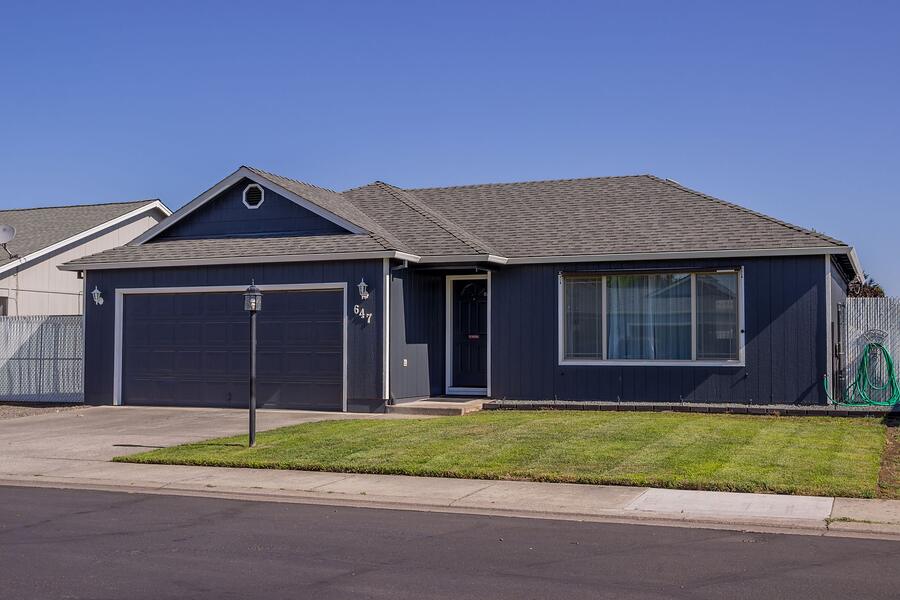
Mid-century ranch housing and its standard weak points
Most of Citrus Heights was built out between the 1950s and the 1970s, in single-story ranch and tract styles on regular lots. That era sits on the boundary between the raised-foundation older city and the slab-on-grade newer suburbs, so both turn up here, and the inspection establishes which one you have before anything else.
Where there is a crawl space, the recurring findings are foundation vents with aged screens failing at a corner and an access door that no longer meets its frame. Where the house is on a slab, the work moves to the garage and the roofline. Either way, the garage is worth attention: a 1960s roll-up door on a worn threshold leaves a gap at ground level, and UC IPM has a young rat under a half-inch gap and a mouse under a quarter inch.
The other mid-century detail is the eave. Shallow eaves and simple roof returns on houses of this period are easy to inspect and easy to seal, which makes this housing stock one of the more straightforward in the metro once the list has been written.
What We Handle in Citrus Heights
Citrus Heights calls for the roof rat side of the work more than most of the metro, and the fruit is the reason.
- Roof rat removal: the dominant call here, with the attic runs trapped and the citrus and limbs identified
- Rodent exclusion: gable vents, eave junctions, the garage threshold and the foundation vents where there is a crawl space
- Mouse removal: garages and kitchens, sealed to a quarter-inch standard rather than a half
- Rodent inspection: the free walk that names the species and counts the openings
- Attic cleanup: droppings and nesting cleared after the trapping finishes, wetted before removal
- Attic insulation replacement: where material has been flattened into runs or soaked through
- Dead rodent removal: an odor traced to a wall or ceiling cavity and the route in closed
A Typical Citrus Heights Job
The situation: A 1964 single-story ranch house with an old grapefruit tree in the back garden. Movement over the hall ceiling after dark from the middle of October, and three pieces of fruit found still on the branch with the insides eaten out. The owners had been picking up windfall and hoping that would settle it.
What gets done: The walk confirms roof rats from the fruit before anyone gets into the attic. The house is on a raised foundation: five vents, two with screens failed at a corner, and a crawl space door sitting loose in its frame. On the roof, a gable vent with a torn screen and a grapefruit limb about a foot from the eave. In the attic, rub marks along one perimeter joist and droppings in two bays. The two vents and the crawl space door close on the first visit; traps work the attic run.
How it turns out: Three visits over roughly two and a half weeks. The gable vent is rescreened after two empty checks and the droppings are wetted and cleared from the two bays. The owners had the grapefruit limb cut back and started picking the fruit rather than letting it hang, which is the part that stops this recurring. Trapping, sealing and the attic clearance were three lines.
What This Costs in Citrus Heights
No cost survey for Citrus Heights or for California exists, so these are national bands, labeled as such, and they describe typical jobs rather than your job. The free inspection settles the actual figure.
| Stage | Typical national band | Source |
|---|---|---|
| Trapping and removal | $250 to $1,200 | HomeGuide 2026 |
| Sealing the whole building | $500 to $2,500 | HomeGuide 2026 |
| Attic cleanup | $600 to $2,500 | HomeGuide 2026 |
| Insulation removal and replacement | $2.50 to $5.50 per square foot | HomeGuide 2026 |
| Rodent removal, average job | About $395, most between $189 and $655 | Angi, national |
Mid-century ranch housing tends to sit in the middle of these ranges: the eaves are shallow and simple to seal, and the opening count is usually moderate rather than long. What pushes a Citrus Heights job upward is a crawl space adding the underfloor items, and an attic that has been occupied across a winter, which brings the cleanup and sometimes the insulation line into play. Each stage belongs on the quote separately.
Keeping rodents out once they are gone
Three approaches, and why sealing is the one that lasts.
Video: 3 Ways To Get Rid Of Mice or Rats, And Keep Them Out!, from Everything Homestead.
Common Questions in Citrus Heights
The questions Citrus Heights callers raise before they book.
Is the fruit tree really the problem?
It is the reason the population stays. UC IPM records roof rats eating citrus and avocados on the tree and leaving the rind hanging hollowed out, and it has them traveling up to 300 feet or more for food, so your tree or a neighbor's keeps pressure on the whole block. Picking the fruit and clearing windfall reduces the supply; sealing the building is what decides whether that supply becomes your problem.
What keeps rats away permanently?
A closed building, maintained. Ultrasonic devices, repellent granules and bait stations all leave the opening exactly as it was. What holds is half-inch hardware cloth over the vents, sheet metal on edges that have been chewed, a properly fitted crawl space door and a sound threshold under the garage door. Keeping limbs off the roof and ivy off the walls removes the route, which UC IPM lists among the conditions conducive to roof rat activity.
Does my house have a crawl space or a slab?
Citrus Heights has both, because it was built out across the decades when construction changed over. A foundation vent in the outside wall at ground level means a crawl space; an unbroken stucco or siding line down to a concrete edge means a slab. It changes the job substantially, since a crawl space adds the vents, the access door and the underfloor penetrations to the list. The inspection establishes it in the first five minutes.
How soon can somebody come out?
A dispatcher is on the line day and night, and inspection slots open from 7am through 7pm, seven days. The dispatcher takes the next slot the contractor covering Citrus Heights has free. The visit costs nothing and you keep the written opening list regardless of what you do next.
Nearby Areas We Serve
The contractors covering Citrus Heights work the neighboring towns as well, across Sacramento County and the wider Sacramento metro.