Rodent Removal in East Sacramento
Almost nothing here was built after 1950, the street trees meet overhead, and there is citrus in half the back gardens. Roof rats have everything they need, so the job is the roofline and the foundation together.
- Pre-war housing, raised foundations
- Roof rats off the canopy
- Free inspection, no obligation
What the housing stock means for a rodent job
East Sacramento is one of the oldest intact residential districts in the city, and the age of the buildings sets the whole inspection. Tudor Revivals, Colonial Revivals and Craftsman bungalows through the Fab Forties and the blocks around McKinley Park are commonly 70 to 100 years old, many with original foundations and roofs. Houses of that era typically sit on a raised foundation over a ventilated crawl space, under a ventilated attic.
That layout gives a rodent two separate territories and gives a contractor two separate lists. Underneath: foundation vents whose original screens have thinned at the corners, a crawl space access door that no longer meets its frame, and every pipe that passes up through the floor. Above: gable vents, the junctions where an eave meets a wall above a porch roof, and roof boards that have been worked on more than once in a century.
Plaster and lath make it quieter than a newer house, which is why problems here are often a season old before anybody hears them. By then the attic usually has droppings along the perimeter joists nearest the eave, which is where a roof rat comes in.
The canopy and the fruit trees are the reason
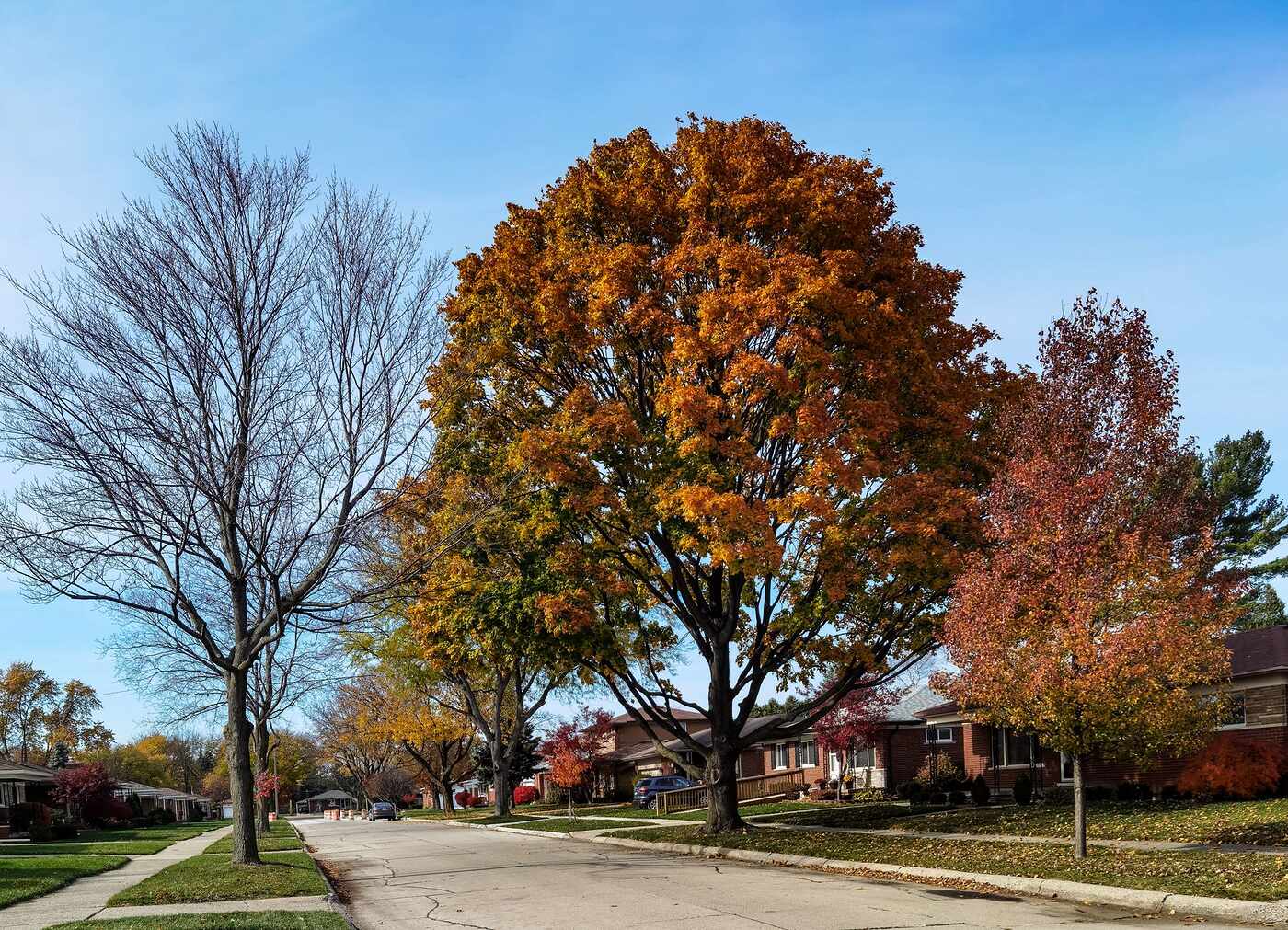
The trees are why roof rats dominate here rather than mice or ground rats. The city urban forest plan counts roughly a million trees and about 19 percent canopy cover citywide, aiming at 35 percent by 2045, and East Sacramento carries far more than its share: mature shade trees on both sides of most streets, meeting over the roadway and reaching the rooflines on the way.
Then the gardens. UC IPM notes that roof rats eat citrus and avocados on the tree and leave hollowed-out rinds hanging, which is the single most recognizable sign on a street like this: an orange or a lemon with the inside gone and the peel still attached to the branch. UC IPM also names climbing hedges as conducive to roof rat foraging, specifically Algerian and English ivy, star jasmine and honeysuckle, and there is a great deal of all four on these blocks.
The practical consequence is that exclusion here is never only metalwork. Cutting a limb back clear of a ridge and pulling ivy off a wall are part of the job, and they are the cheapest part.
What a visit in East Sacramento looks like
The walk starts outside and takes longer here than in a newer neighborhood. Every foundation vent gets checked and counted, the crawl space door gets opened, the porch roof junction gets a ladder, and the trees get read for contact with the building. Only then does anyone go into the attic.
Trapping follows the runs found in the attic and, where there is activity underneath, along the crawl space perimeter too. UC IPM advises spacing traps 10 to 20 feet apart and leaving them baited but unset until the bait has been taken several times where animals are wary of a new object, which is normal in an established population. The quiet openings are closed on the first visit in half-inch hardware cloth and sheet metal; the active ones are closed after the checks come up empty.
The services these streets call for most are roof rat removal and rodent exclusion, usually together, with attic cleanup following where a population has been in place over a winter. The contact page has the hours and the address.

Keeping rodents out once they are gone
Three approaches, and why sealing is the one that lasts.
Video: 3 Ways To Get Rid Of Mice or Rats, And Keep Them Out!, from Everything Homestead.
What an East Sacramento job turns on
Three things that decide the outcome on a pre-war house here.
Both ends of the building get closed
A raised foundation under a ventilated attic means the openings run from the soil to the ridge, and a quote covering only one end leaves the job half done. The foundation vents, the crawl space door and the underfloor penetrations belong on the same list as the gable vents and the eave junctions. On a house of this age that list is rarely short.
UC IPM specifies 16 or 18 gauge hardware cloth at half-inch mesh for rat exclusion.
The trees are treated as part of the structure
A limb resting on a ridge is an entrance, and no amount of steel at the eave changes that. The inspection reads which branches touch, which wires run to a fascia, and whether ivy has grown up a wall, then says so in writing. A tree service call is usually the cheapest line in the whole remedy.
UC IPM names English and Algerian ivy, star jasmine and honeysuckle as conducive to roof rat foraging.
Citrus in the garden changes the timescale
Fruit on a tree is a food supply that holds a population on the block whether or not your own house is open, and UC IPM has roof rats traveling up to 300 feet or more to reach food. Picking fruit up off the ground and clearing windfall is part of the answer, and it explains why sealing matters more here than trapping volume.
UC IPM records roof rats hollowing citrus on the tree and leaving the rind hanging.
A typical East Sacramento call
The situation: A 1931 Tudor Revival on a street of mature shade trees near McKinley Park. Movement over the back bedroom ceiling from the middle of October, two hollowed navel oranges found under the tree, and owners who had been told by a neighbor it was probably squirrels in the eaves.
What gets done: The outside walk counts four foundation vents, two with screens corroded through at a corner, a crawl space door sitting proud of its frame, and a limb resting on the ridge above the back bedroom. In the attic, rub marks along two perimeter joists and droppings in three bays. The two failed vents and the crawl space door are closed on the first visit, traps go along the attic runs, and the eave junction carrying the traffic stays open for the time being.
How it turns out: Three visits across a little under three weeks. The eave is closed after two empty checks, the droppings are wetted and cleared from the three bays, and the owners book a tree service for the limb. The quote listed trapping, sealing and the attic clearance separately, and the species turned out to be roof rats as the fruit had already indicated.
East Sacramento questions
What callers from these streets ask first.
Is it squirrels in the eaves or rats in the attic?
The hour settles it more reliably than the noise. Squirrels are daytime animals, heaviest at first light and again toward dusk, and they are heavy-footed. Roof rats work after dark and sound lighter and faster. Hollowed citrus left hanging on a tree is a roof rat sign specifically. The distinction matters for the trapping rules as well: the Department of Fish and Wildlife exempts rats and mice from its trapping license requirement, and squirrels stay inside it.
Do I have to cut the tree down?
Almost never. What a roof rat uses is contact between a limb and the building, so cutting the branches back clear of the roof usually removes the route without touching the trunk. Ivy growing up a wall is worth pulling off for the same reason, since UC IPM lists climbing hedges as conducive to roof rat foraging. The inspection says which limbs matter, and the tree work is yours to arrange.
My house is ninety years old. Is it hopeless?
No, and houses of this age are the most common job on these streets rather than the hardest. The openings are predictable once somebody has counted them: foundation vents, the crawl space door, underfloor penetrations, gable vents and the eave junctions. They close in half-inch hardware cloth and sheet metal, and the written list of closures is what holds afterward. Age adds items to the list instead of making them unfixable.
How soon can somebody come out?
You can call at any hour, and inspection appointments run between 7am and 7pm on every day of the week. The dispatcher books the next slot the contractor covering East Sacramento has free. The inspection costs nothing and you keep the opening list whether or not you go ahead.