Rodent Inspection in Sacramento, CA
The inspection is the part of the job that decides everything after it. A walk of the roofline, the attic, whatever sits under the floor and the trees in the yard, with every opening written down.
- No charge, no obligation
- Every opening photographed
- Itemized quote written from it
What a free rodent inspection in Sacramento covers
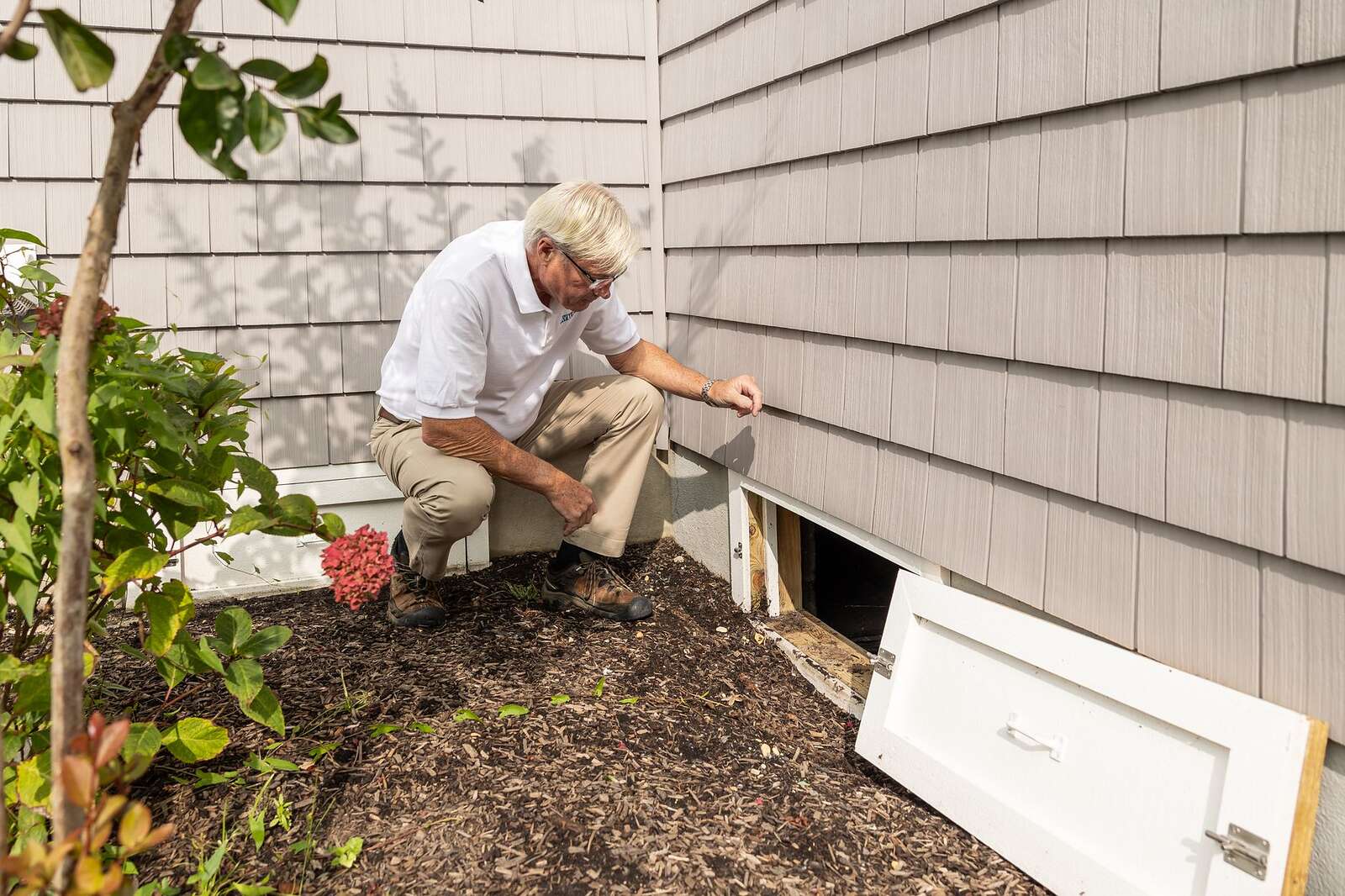
The visit works from the outside in. A contractor walks the perimeter for burrow openings, foundation vents, the crawl space access door and the pipe penetrations through the underfloor, then reads the roofline: gable vents, the junctions where an eave meets a wall, roof returns, HVAC penetrations and the garage door corners. Then the attic, and the crawl space where there is one to enter.
Inside, the work is identification. Droppings are measured and located, rub marks along joists and beams are traced into runs, gnawing is aged, and nesting material and disturbed insulation are noted bay by bay. Outside again, the trees and the fruit get a look, because a limb resting on a ridge and a navel orange eaten out on the branch are both part of the diagnosis.
- Full perimeter walk, each opening recorded with a photograph
- Roofline and attic inspection, with the runs mapped rather than guessed
- Crawl space entry where access allows, and the underfloor insulation assessed
- Species identified from droppings, rub marks and the pattern of activity
- Trees, fruit and ground cover assessed for what is holding the animals on the property
- An itemized quote with trapping, sealing and cleanup as separate lines

How the species gets identified on site
Three things settle it: the height of the activity, the size of the droppings and the time of day. UC IPM describes roof rats living in attics, wall voids, ceiling voids and cabinets, while Norway rats stay at ground level and below, usually in burrows, and house mice work within a very small radius of their nest. So a scratching over a bedroom ceiling after dark, a hole worn into bare soil at the foundation, and grains of dirt in a cutlery drawer each point somewhere different.
Droppings give the size class. Rat droppings run about a quarter to half an inch; mouse droppings sit clearly under a quarter inch and appear in far greater numbers. Daytime footfalls overhead, heaviest at first light and again toward dusk, usually mean a squirrel rather than a rat, which matters because the Department of Fish and Wildlife exempts rats and mice from its trapping license requirement while squirrels, opossums and raccoons stay inside it.
The giveaway that is particular to this city is fruit. UC IPM notes that roof rats eat citrus and avocados on the tree and leave hollowed-out rinds hanging, so an orange or a lemon with the inside gone and the peel still on the branch is a diagnosis on its own.
Why the inspection costs nothing here
Because it is the only honest way to quote the work. HomeGuide prices a standalone rodent inspection nationally at $0 to $175 and Angi puts inspection fees at $100 to $200, so paying for one is normal. Through this line it is free, and the reason is that no figure written without seeing the building is worth anything.
What you get from it is a document. The list of openings, the species, the condition of the attic and the underfloor, and then the quote built from those findings with each stage priced on its own. If you take that list and close the openings yourself, or hand it to another contractor, that is your call and the inspection still cost you nothing.
How long does the inspection take?
Usually between forty minutes and two hours, and the building decides which. A single-story slab house in Natomas with a clean attic is at the short end. A 1920s bungalow with four foundation vents, a crawl space, a two-story elevation and a mature tree on the ridge takes the long end, because each of those is a separate thing to look at and photograph.
Attic access and crawl space access are the two variables that shorten or lengthen it most. A hatch blocked by storage, or a crawl space door screwed shut, turns part of the inspection into guesswork, so clearing access beforehand is the one piece of preparation that really helps.
What should I ask during the inspection?
Ask to be shown the openings rather than told about them. A contractor who has found eleven entry points can point a flashlight at each one, and walking the list with them is how you learn whether the survey was done or improvised.
Then ask what closure is proposed for each, with the mesh size and gauge. Ask which openings will be sealed first and which are being left open for the trapping. Ask how many follow-up visits the price includes, since Angi puts national follow-ups at $50 to $150 each. And ask for the company registration number so you can check it on the Structural Pest Control Board lookup before anyone starts.
What the work after the inspection costs
California publishes no city-level rodent cost survey, so the bands below are national and labeled that way. The inspection turns them into an itemized quote for your address, which is the only number that applies to your house.
| Stage | Typical national band | Source |
|---|---|---|
| Inspection on its own | $0 to $175 | HomeGuide 2026 |
| Inspection fee, typical range | $100 to $200 | Angi, national |
| Trapping and removal | $250 to $1,200 | HomeGuide 2026 |
| Sealing the building | $500 to $2,500 | HomeGuide 2026 |
| Attic cleanup and decontamination | $600 to $2,500 | HomeGuide 2026 |
| Insulation removal and replacement | $2.50 to $5.50 per square foot | HomeGuide 2026 |
The inspection is what tells you which of those lines you are facing. Plenty of visits end with trapping and a short sealing list and nothing else; a few end with an attic that needs clearing and re-insulating, and the difference between those two outcomes is several thousand dollars. Knowing which one you have before you start is the point.
What an inspector is looking for in a Sacramento house
Build era first. East Sacramento, Midtown, Land Park, Curtis Park, Oak Park and Del Paso Heights are dominated by pre-1975 homes, many of them Craftsman bungalows and Tudor Revivals 70 to 100 years old with original foundations and roofs. Houses of that age usually sit on a raised foundation over a ventilated crawl space, which means the inspection has a whole underfloor dimension that a newer house does not.
Then the canopy and the fruit. The city counts roughly a million trees and about 19 percent canopy cover in its urban forest plan, with a target of 35 percent by 2045, and the City of Trees name goes back to the 1850s. That shade is why roof rats dominate here, and the inspection reads the trees as part of the building: which limbs touch a roof, which wires run to a fascia, and whether there is citrus in the back garden holding a population in place.
Then the water. Sacramento sits behind levees at the confluence of two rivers, and Norway rats are described locally as traveling those levees into garages and crawl spaces, heaviest from fall through spring when winter rain floods the bank burrows. On a River Park or West Sacramento address the inspection weighs the foundation vents more heavily than the gable. Natomas and the south county tracts reverse it: slab-on-grade, nothing underneath, everything overhead.
Who is qualified to carry out the inspection
In California, inspecting a structure for rodents for hire requires a company registered with the Structural Pest Control Board and licensed in Branch 2, the general pest category covering household pests and rodents, working through licensed operators or field representatives. That applies to the inspection as much as to the treatment, which is worth knowing if somebody offers a free look with no credential attached.
Every contractor routed through this line holds the Branch 2 license, and the Board runs a public lookup so any company registration can be confirmed before the visit. Where an inspection finds damage beyond mesh and sealant, such as a chewed sill plate or a rotted joist, that repair is structural work and belongs with Branch 3 or a CSLB-licensed building contractor; a straight inspector will say so rather than quote it as pest work.
A written report matters if the inspection is for a sale, a tenancy or an insurance file. That is a separate document with its own page, covering what was checked, what was found or absent on the date, and the company registration behind it.
Services that run alongside this one
Most Sacramento jobs move through two or three stages, and these pages cover the steps either side of this one.
- Rodent Exclusion: Closing foundation vents, crawl space doors, gable vents and eave gaps in steel and sheet metal.
- Roof Rat Removal: Trapping the climbing rat that dominates Sacramento attics, with the roofline closed behind it.
- Rodent Clearance Letters: A written report of what was checked and found, for a sale, a lease or an insurance file.
How the stages fit together is set out on the about page, and the line is open at any hour if you would rather ask.
Finding the entry points
Where the openings usually turn out to be.
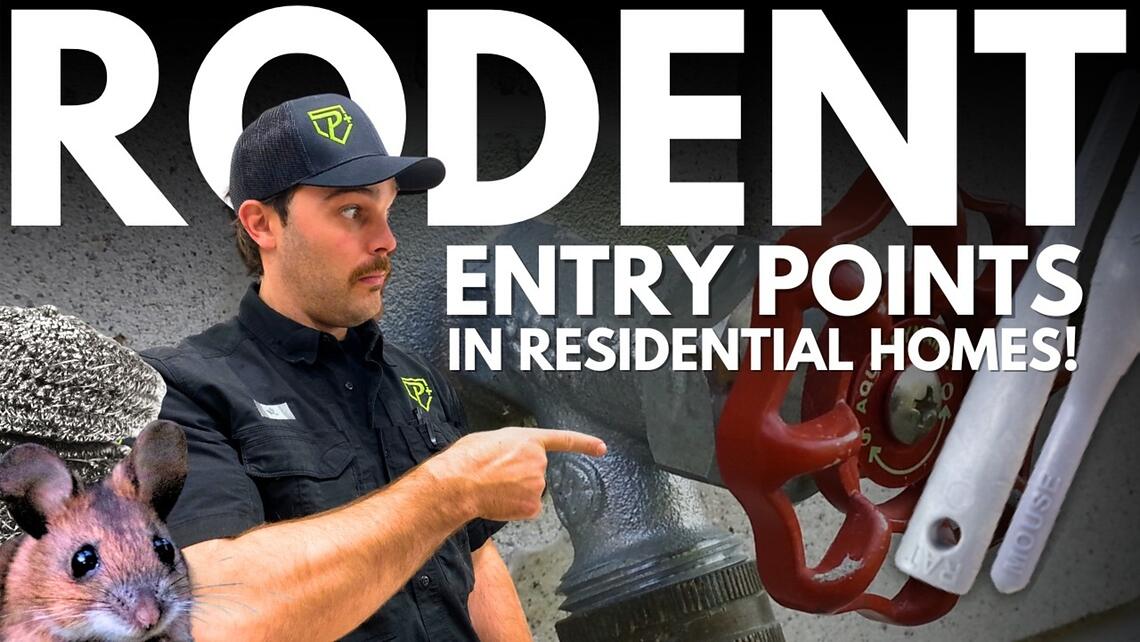
Video: How to find rodent entry points and seal them, from Pest Protection Plus.
How the inspection is booked and run
Five steps, from the first call to the quote landing in writing.
-
Call and describe it
The noise, where in the building, what hour and how long, plus anything found. That narrows the species and decides which kind of visit gets booked.
-
A slot inside seven days a week
Inspections run 7am to 7pm every day, and the dispatcher books the next opening the contractor covering your area has. Clear the attic hatch and the crawl space door beforehand if you can.
-
The walk, outside in
Perimeter, foundation vents and burrows, then the roofline, then the attic and the crawl space, then the trees and the fruit. Every opening photographed as its own item.
-
Identification on the evidence
Droppings measured and located, rub marks traced into runs, gnawing aged, and the species named from what is there instead of from a guess on the phone.
-
An itemized quote
The opening list, the condition of the attic and the underfloor, and a price with trapping, sealing and cleanup on separate lines, so each can be read against the published bands.
Ready to start? Call (916) 644-8455 or Book a Free Inspection.
Why the inspection is worth having even if you do nothing
Three things you keep regardless of what you decide afterward.
A list you can act on yourself
The output is a written set of openings with locations and proposed closures. Plenty of homeowners take that list and close the simpler items themselves with hardware cloth and steel wool, and hire only for the roofline. The list is yours either way, and it costs nothing.
HomeGuide prices a standalone inspection nationally at $0 to $175.
The right species, which changes the whole plan
A roof rat job works overhead at a half-inch standard. A mouse job works at a quarter inch, close to the droppings. A Norway rat job starts at the soil line. Guessing wrong means sealing a building to the wrong standard and wondering why the noise continued.
UC IPM puts a mouse through a three-eighths inch opening and a young rat under a half-inch gap.
A benchmark to read a quote against
Once you know the building has eleven openings and a clean attic, a quote that prices attic decontamination is answerable. The published national bands printed across these pages do the same job from the other direction, and together they make a thin quote visible.
Angi puts typical national inspection fees at $100 to $200, which this one does not charge.
What Reddit Says About Rodent Inspections in Sacramento
The advice homeowners give each other about inspections is mostly about watching what the inspector does. The accounts people rate highly describe somebody who got a ladder out, went into the crawl space, came back with photographs and walked the openings with them. The accounts people warn about describe a ten-minute visit, a bait station placed by the side gate, and a price read off a tablet.
Specific red flags recur. An inspection that never leaves the ground. A refusal to enter the crawl space or the attic. A quote produced before the walk finishes. One number with no list behind it. A diagnosis of the species made from the doorway. An upsell to annual treatment with no sealing line anywhere on the page.
The questions people recommend are simple and diagnostic. Can you show me each opening. What closure goes on each one, in what material and what gauge. Which ones are you leaving open for the trapping. How many return visits am I paying for. What is your company registration number. Somebody who answers all five without hesitating has usually done the work.
There is also a recurring note about getting more than one inspection, on the grounds that the prices move less than the opening lists do, and that the contractor who found nine openings and the one who found three were looking at the same house. Free inspections make that comparison cheap.
Which is the argument for booking one before you decide anything at all.
A typical inspection on a first call
The situation: A two-story house in Land Park, bought eighteen months ago. Faint movement above the upstairs hall at night, nothing seen, and a neighbor who mentioned that the previous owners had somebody out about rats years ago. The owners wanted to know whether they had a problem before they spent anything on it.
What gets done: The walk takes a little under two hours. Outside, two foundation vents with original screens thinning at the corners and a wisteria grown into the eave above the porch. On the roof, an old gable vent with a screen patched in chicken wire, which is too coarse to exclude anything. In the attic, a single line of rub marks along one joist and droppings in two bays, both old and dry, with no fresh sign anywhere.
How it turns out: The report says historical activity with nothing current, lists five openings with the closures proposed for each, and quotes sealing on its own with no trapping and no cleanup. The wisteria gets a recommendation rather than an invoice. The owners had the three easy vents closed themselves and hired the roofline item, which is exactly the use the list is there for.
Inspection questions Sacramento callers ask
What people want to know before booking a visit.
Is the inspection really free?
Yes, and there is no obligation attached to it. HomeGuide prices a standalone inspection nationally between $0 and $175 and Angi puts typical inspection fees at $100 to $200, so a charge would be normal in the trade. Through this line the visit costs nothing, you keep the findings, and you are free to close the openings yourself or take the list elsewhere.
Do I need to be home for it?
It works better if you are. Half the diagnosis comes from what you have heard and when, which rooms it was over, and whether anything has been found in a cabinet or under a tree. Being there also means the contractor can show you each opening rather than describe it later, and walking the list together is the best protection against a survey that was not really done.
What if the inspection finds nothing?
That is a result worth having, and it happens regularly. A report of old, dry droppings and no current activity tells you the problem was dealt with before you arrived, and the openings still get listed so you can close them before anything comes back. No trapping gets quoted where there is nothing to trap.
Will they go into the crawl space?
On a raised-foundation house, yes, where the access allows it. That is where a Norway rat problem shows itself, where soiled underfloor insulation is found, and where the pipe penetrations through the floor get counted. Unscrewing the access door before the visit removes the main reason an inspection ends up incomplete.
How soon can somebody come out?
The phone has somebody on it at any time, and site visits are arranged between 7am and 7pm, weekends included. The dispatcher takes the next slot the contractor covering your area has open. Whether anyone can attend outside those hours depends on the contractor dispatched.